STREAM LIVERTMP · SRT · WebRTC
01
Rozpocznij transmisję
RTMP · SRT · WebRTC
Streamuj przy użyciu nowoczesnych protokołów i zachowaj kontrolę nad wyjściem.Otwarta alternatywa dla zamkniętych studiów streamingowych.
Dostępne dla
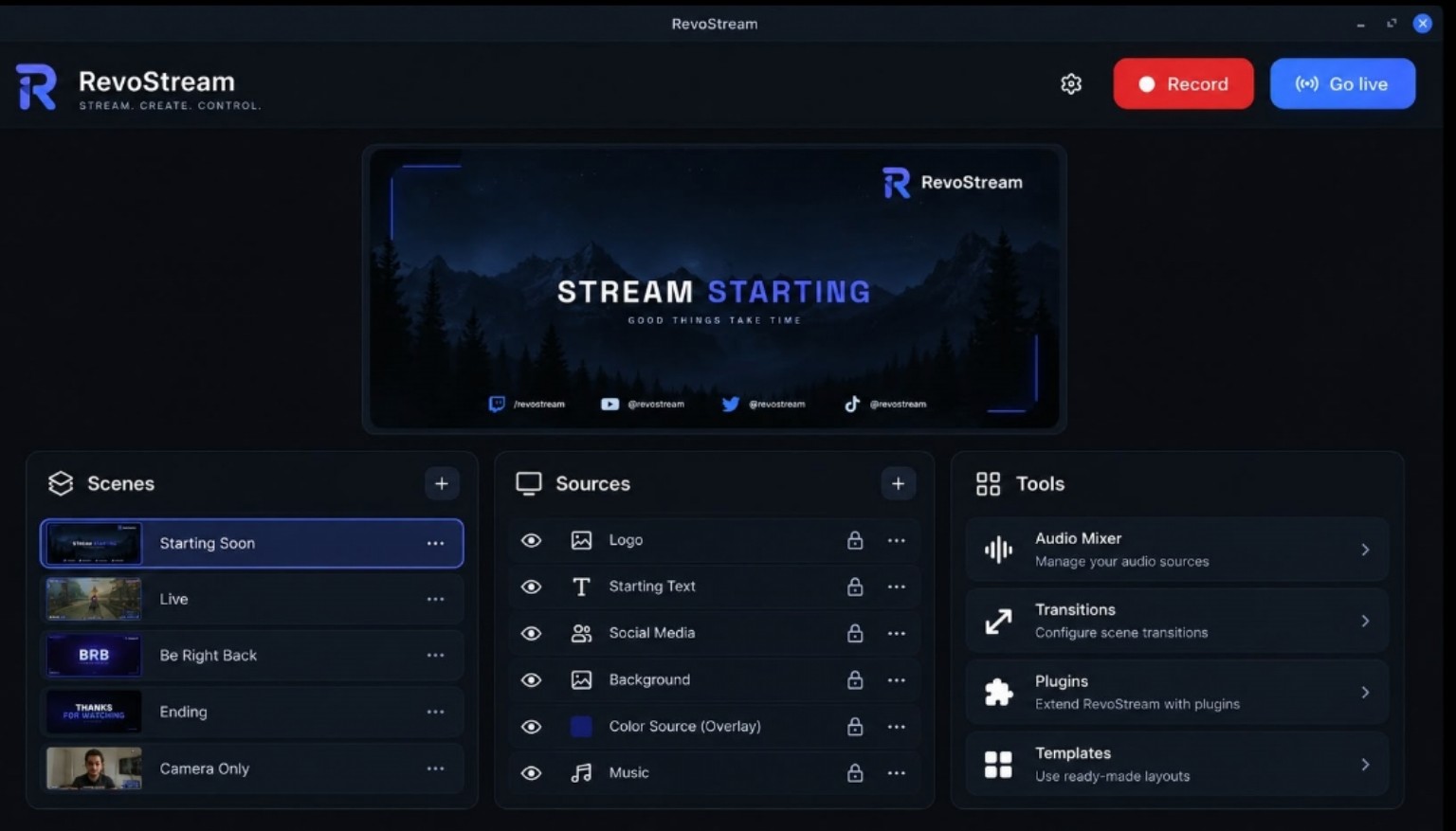
Profesjonalne sterowanie, przejrzyste zarządzanie scenami i rozszerzalna architektura — w szybkim desktopowym workflow.
Profesjonalne narzędzia do streamingu wysokiej jakości.
Elastyczne i zaawansowane zarządzanie scenami.
Rozszerzaj funkcjonalność dzięki pluginom społeczności.
Tworzone wspólnie ze społecznością i dla niej.
To nie tylko silnik streamingu. RevoStream jest zbudowany wokół rzeczy, które naprawdę robisz przed, w trakcie i po rozpoczęciu transmisji.
RTMP · SRT · WebRTC
Streamuj przy użyciu nowoczesnych protokołów i zachowaj kontrolę nad wyjściem.Kamera · Ekran · Przeglądarka · Media
Twórz sceny ze źródeł, które składają się na Twoją produkcję.Sceny · Przejścia · Audio · Nakładki
Przełączaj, miksuj i kontroluj transmisję bez opuszczania desktopowego studia.Twitch · YouTube · Kick · Własny RTMP
Korzystaj ze standardowych wyjść i własnych endpointów dla wybranych platform.RevoStream opiera się na otwartym modelu desktopowym: przejrzystych narzędziach, natywnej wydajności i stacku produkcyjnym, który możesz analizować, rozszerzać i kontrolować.
„Twój stream powinien być infrastrukturą, którą kontrolujesz — nie usługą, którą wynajmujesz.”
Dziś oparte na libobs. Jutro budujące własny core w Rust. Celem jest desktopowy stack, który pozostaje blisko użytkownika i z czasem staje się coraz bardziej natywny.
Nie zmieniasz platformy dlatego, że streaming jest zepsuty. Zmieniasz ją, gdy chcesz większej kontroli nad narzędziami, workflow i tym, co będzie się działo dalej.
| Zamknięte / platform-first | RevoStream | |
|---|---|---|
| Model biznesowy | Zależność od platformy / usługi | Open source |
| Workflow | Kontrolowany przez ekosystem | Twój stack |
| Architektura | Cloud / platform-first | Desktop-first |
| Rozszerzalność | Definiowana przez platformę | Otwarte i rozszerzalne |
| Core | Kontrolowany przez dostawcę | libobs dziś → Rust core jutro |
| Protokoły | Integracje platformowe | Otwarte protokoły |
| Rozwój | Plan rozwoju produktu | Otwarty rozwój |
| Platformy | Ograniczenia platformowe | Linux · Windows · macOS |
RevoStream rozwija tę ideę w kierunku nowoczesnego, produktowego desktopu — przechodząc od libobs dziś do własnego, natywnego core'a w Rust jutro.
Twoje koncepcje i ekosystem OBS — z nowoczesnym doświadczeniem desktopowym i planem przejścia do architektury natywnej dla Rust.
| Możliwość | OBS | Streamlabs | RevoStream |
|---|---|---|---|
| Interfejs | Klasyczny | Skupiony na twórcach | Nowoczesny UI desktopowy |
| Pluginy OBS | ✓ Natywne | ◐ Obsługiwane | ✓ Obsługiwane |
| Scenes & sources | ✓ | ✓ | ✓ |
| Narzędzia produkcyjne | ✓ | ✓ | ✓ |
| Open source | ✓ | — | ✓ |
| Rozszerzalne | ✓ | ◐ Ograniczone | ✓ Otwarte i rozszerzalne |
| Wydajność | Natywne | Wyższy narzut* | Benchmark w przygotowaniu |
| Architektura | C / C++ | Platform ecosystem* | libobs → Rust core |
| Kierunek rozwoju core | Nakierowany | Nakierowany | Plan rozwoju w kierunku natywnego Rusta |
Śledź rozwój, otwieraj zgłoszenia, proponuj funkcje lub kontrybuuj kod. RevoStream rozwija się publicznie — roadmapa jest dostępna dla wszystkich.
Kamienie milowe pozostają widoczne — ale pojawiają się dopiero po poznaniu produktu i zrozumieniu, dlaczego powstaje.
Natywny pipeline przechwytywania, wyjście streamu i renderowanie scen.
Dynamiczne przełączanie scen, nakładki i sterowanie produkcją.
Stabilne wersje desktopowe i integracje specyficzne dla platform.
RevoStream nie zaczynał z idealnym stackiem. Ewoluował, rozwiązując problemy, które naprawdę miały znaczenie.
Budowa na kodzie C++. Praktyczne rozwiązanie na tamten moment, ale trudne w długoterminowym utrzymaniu i rozwijaniu.
Eksploracja kierunku opartego na Node, związanego ze starszymi wersjami i ograniczonym wsparciem platform.
Dziś korzystamy z libobs, budując jednocześnie revo-lib jako drogę do natywnego core'a w Rust i długoterminowej kontroli cross-platform.